Big Ideas
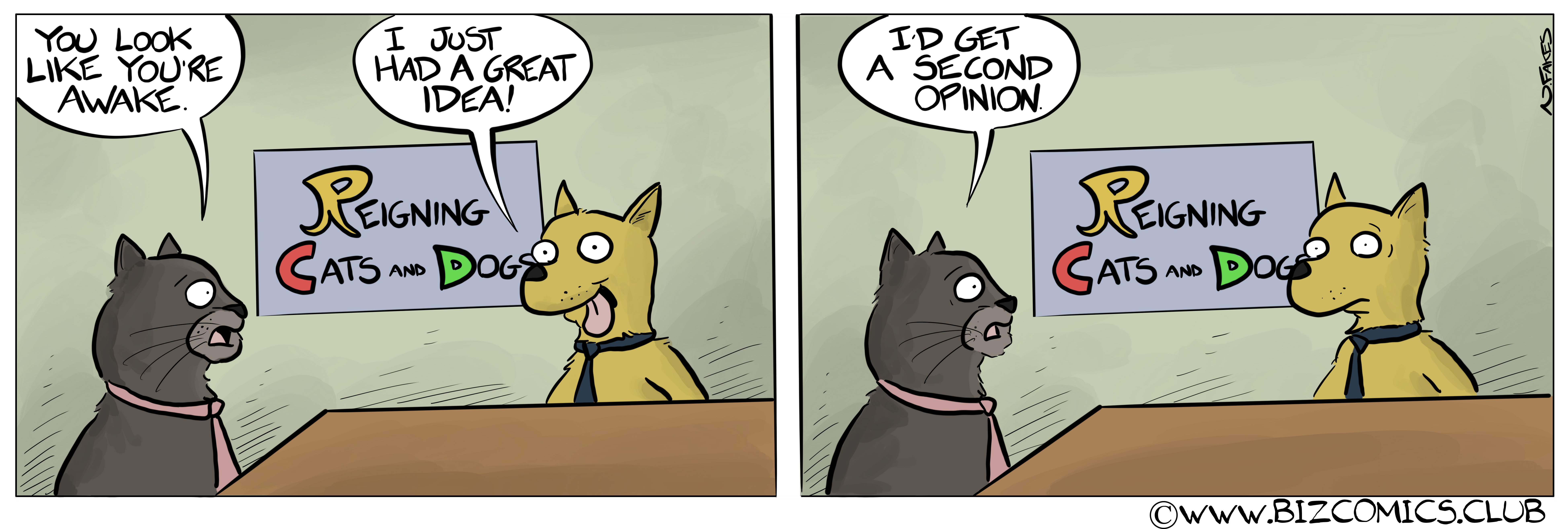
Ya know what we love? We love it when people say things like, “Let me give you a good idea.” Or they might say, “Here’s a funny story.” We especially love it when people go all in and say things like, “Wait’ll you hear this. This is really smart.”
Okay. We lied. We actually don’t love that. We don’t even like it.
We don’t like it because it’s presumptuous. Unless you’re something like The World’s Foremost Authority or The Ultimate Guru, how do you know if an idea is good, a story is funny, or some notion is smart? Is there some kind of objective scale for that sort of thing? If the scale is 1 to 10, with 10 being the best, the funniest, or the smartest, how high does something need to score before it’s judged to be good, funny or smart?
“Dang, Bubba. That joke was a solid 8, one point above a knee-slapper and just one shy of a gut-buster!”
“Well, hold on thar, Joe Bob. The boys down at Lucky Luke’s Juke & Puke told me that one was a gol-durn side-splitter.”
Take a Step Back
Here’s an idea: The next time you want to share something, just say, “Let me give you an idea.” If it makes you a million dollars, chances are it must have been good. Or say, “Here’s a story.” If the person to whom you tell it laughs his ass off, it might be a 10. And if you ask, “Do you think this is smart?” and someone awards you a patent or a Ph.D., chances are there’s a little intelligence behind it — or at least enough luck to make someone think you’re pretty sharp.
If you think you have a great idea, share the idea but keep the great part to yourself. Otherwise you’re likely to end up like the unfortunate yokel in the old joke about the famous last words of a redneck: “Hey! Watch this!”
As Robert Brault wrote: “Stay out of the court of self-judgment, for there is no presumption of innocence.”
This content is available for syndication. Please contact us for details.
The warning about calling an idea “good” before anyone has heard it really lands—confidence can quickly turn into presumption. Let the idea or story prove itself instead of announcing how smart or funny it is.
The point about “Here’s a funny story” being presumptuous really lands—let the idea or story prove itself instead of announcing its quality first. That kind of humility makes the reader more willing to listen.
The point about “Let me give you a good idea” being presumptuous really lands—calling something smart or funny before sharing it sets expectations nobody asked for. It’s better to let the idea earn that label on its own.
The warning about calling an idea “good” before anyone has heard it is spot-on—let the reader decide. “Wait’ll you hear this” practically guarantees the story won’t live up to the hype.
The point about “Let me give you a good idea” being presumptuous really lands—calling something smart or funny before sharing it sets expectations nobody asked for. Better to let the idea or story prove itself.
The warning against opening with “Let me give you a good idea” really hits home—calling something smart before sharing it makes readers judge the setup instead of the substance. Let the idea or story prove itself.
The point about “Here’s a funny story” being presumptuous really lands—let the idea or story prove itself instead of announcing its greatness first. A little humility makes “big ideas” much easier to hear.
The warning about calling an idea “good” before anyone has heard it really resonates. Letting readers decide whether it’s smart or funny makes the conversation feel more genuine.
The point about “Let me give you a good idea” being presumptuous really lands—calling something good or funny before sharing it sets an expectation the idea may not deserve. I’d much rather decide for myself than be told how to react.